Turn on a tap in Boston and the water that comes out has been through two reservoirs, an aqueduct, a treatment plant in Marlborough and a city’s worth of pipes. Somewhere in that journey a measured amount of fluoride is added to it, as it has been for decades. The Massachusetts Water Resources Authority (MWRA), which supplies the water, says it aims for 0.7 parts per million and adds fluoride “to reduce tooth decay.”
That practice is now argued over more than at any time in a generation. Two states banned it in 2025, the U.S. health secretary said the federal government would stop recommending it, and towns around Boston are holding votes and forums on whether to keep it. This article explains what is in the water, who adds the fluoride and why, what the latest scientific reviews say, and who decides whether it stays.
0.7 mg/L
MWRA’s fluoride target, the level the U.S. Public Health Service recommends
0.71 ppm
average fluoride in MWRA water in 2025, against a legal limit of 4
58.2%
of Massachusetts residents on public water got fluoridated water in 2022, says the CDC
2 states
have banned fluoridation: Utah and Florida, both in 2025
Where Boston’s water comes from
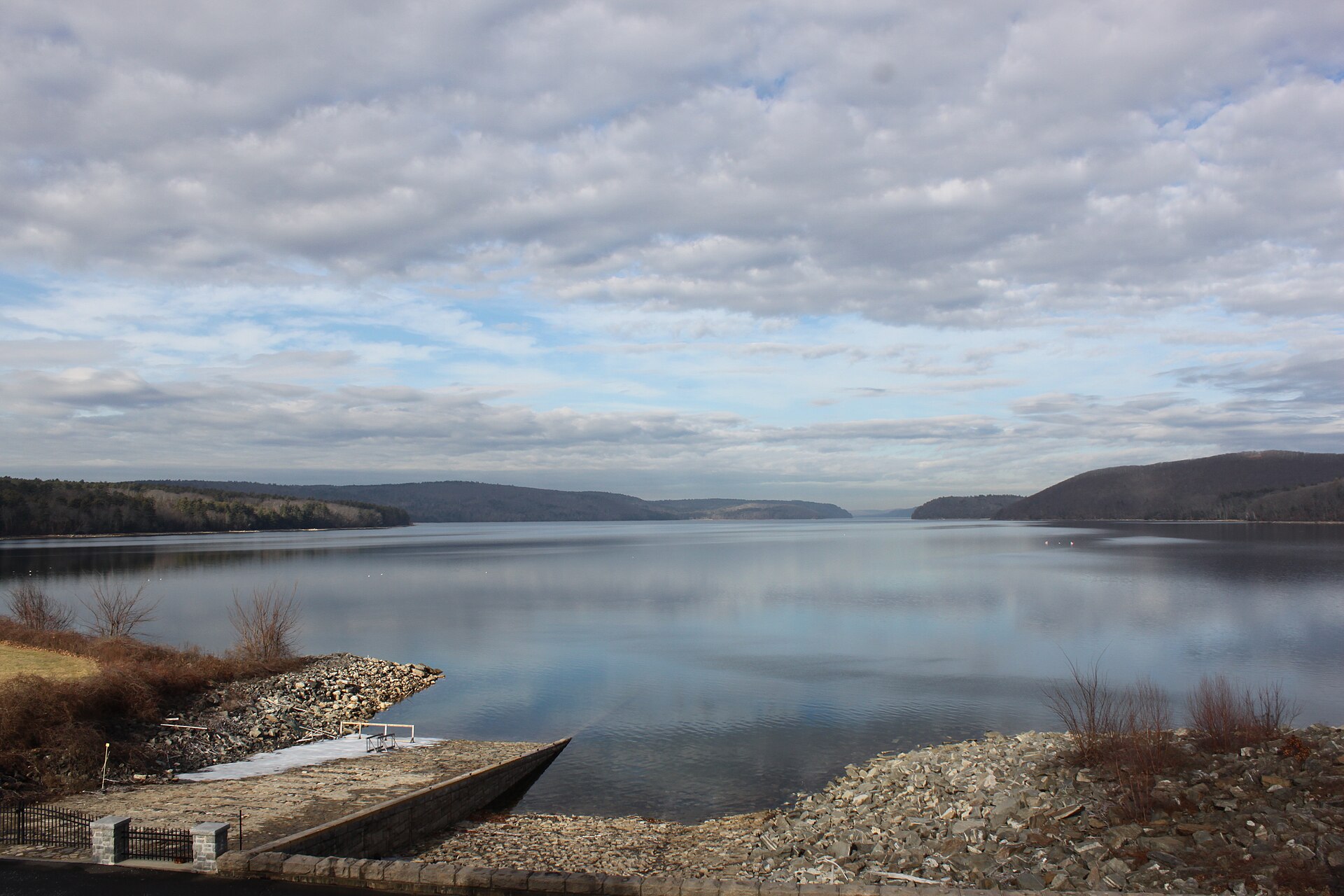
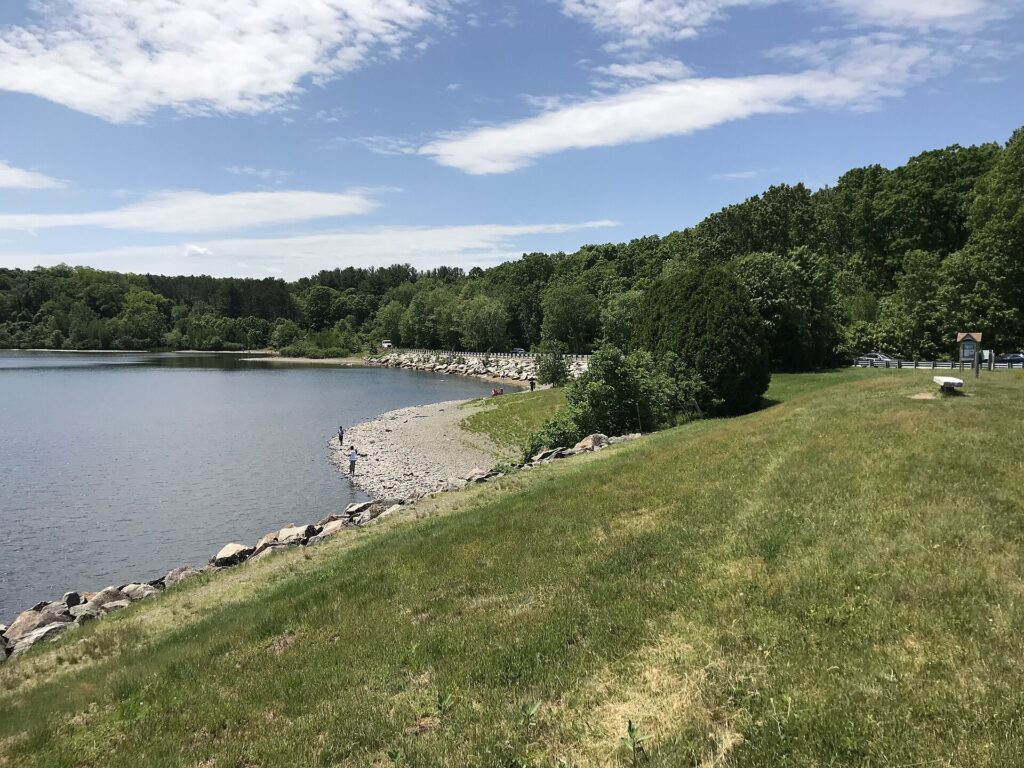
Boston does not draw its water from anywhere near Boston. According to MWRA’s 2025 water quality report, the supply comes from “the pristine Quabbin Reservoir with 412 billion gallons of storage and the Wachusett Reservoir with 65 billion gallons of storage,” which together provide an average of about 200 million gallons a day.
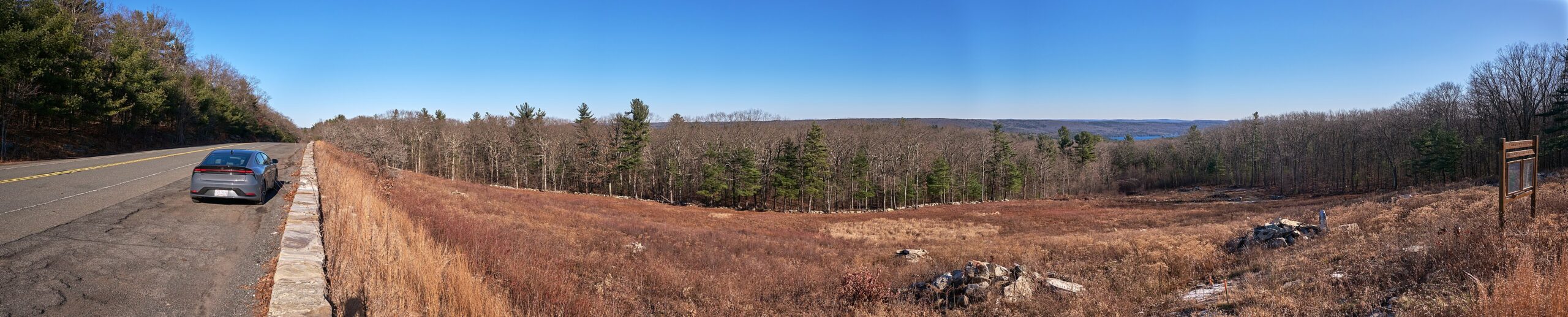
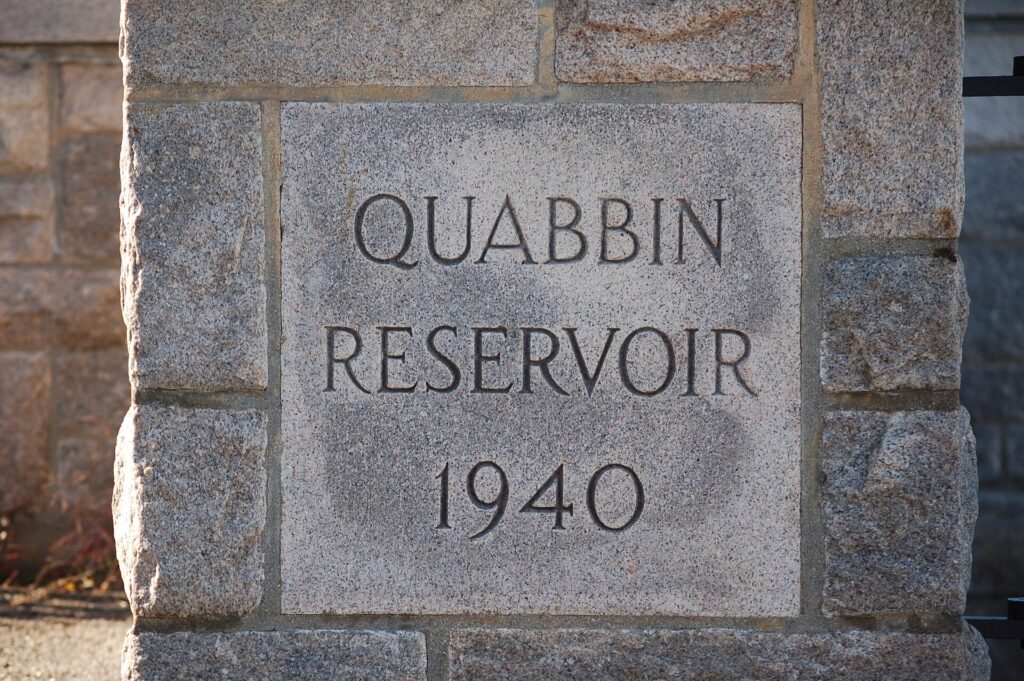
A granite marker at the reservoir gives its date in two lines:
QUABBIN
RESERVOIR
1940
MWRA is a wholesaler. It says it provides “wholesale water and sewer services to 3.1 million people and more than 5,500 large industrial users in 61 metropolitan Boston communities.” Each of those cities and towns, MWRA explains, operates and maintains its own network of pipes. In Boston that is the Boston Water and Sewer Commission, which publishes MWRA’s annual test results for the city.
Not every customer community drinks the same mix. MWRA’s own results pages list some towns, such as Burlington, Canton and Needham, as only partly supplied by MWRA, and three western communities, Chicopee, South Hadley Fire District 1 and Wilbraham, as served through a separate pipeline, the Chicopee Valley Aqueduct. Everything below is about the water that serves Boston.
Where the fluoride goes in
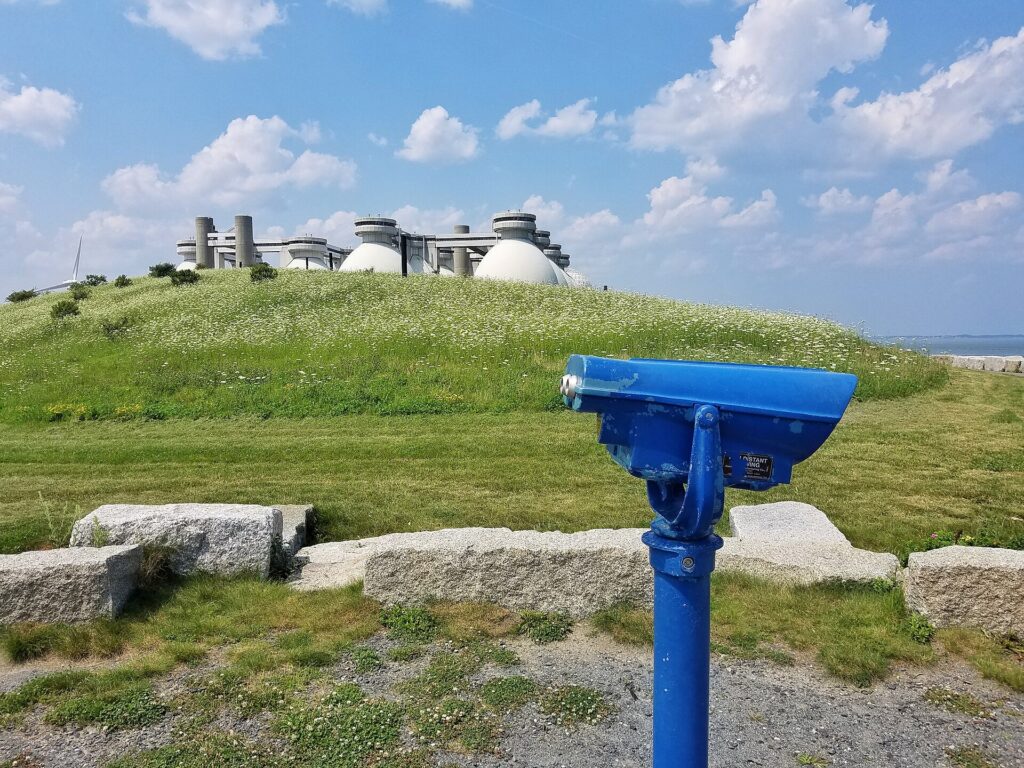
The fluoride is added at one place. “Since July 2005, metropolitan Boston’s water supply has been treated at the John J. Carroll Water Treatment Plant (CWTP) in Marlborough,” MWRA says. On its page for the plant, MWRA lists each chemical used there and why. Fluoride is added as hydrofluorosilicic acid, at 0.7 milligrams per liter, and the reason given is “For dental health.”

How long has this been going on? MWRA says only that it “has added fluoride since the 1970s.” The Massachusetts Department of Public Health (DPH), in its 2021 list of cities and towns by fluoridation status, gives 1978 as the year Boston began and 1974 for Cambridge.
- Community water fluoridation
- Adjusting the fluoride in a public water supply to a level set for preventing tooth decay. The CDC notes that “almost all water contains some naturally occurring fluoride, but usually at levels too low to prevent cavities.”
- ppm and mg/L
- Parts per million and milligrams per liter. For water the two are the same amount, which is why MWRA gives its target as 0.7 ppm on one page and 0.7 mg/l on another.
- Hydrofluorosilicic acid
- The liquid compound MWRA lists as the source of the fluoride it adds at the Carroll plant.
- MCLG
- Maximum Contaminant Level Goal: the U.S. Environmental Protection Agency’s health-based goal for a substance in drinking water. For fluoride it is 4.0 ppm.
- Home rule petition
- A request from a Massachusetts city or town to the Legislature for a law that applies to that place alone.
How much fluoride is in the water
Every year MWRA publishes its test results, and the Boston edition for 2025 data was published in June 2026. In its table of substances found in the water, the fluoride line reads exactly:
Fluoride ppm 4 0.71 0.4–0.8 4 No Additive for dental healthIn order, that is the unit, the highest level allowed (4 ppm), the 2025 average (0.71), the lowest and highest readings (0.4 to 0.8), the health goal (4), whether there was a violation (no), and where the fluoride comes from. The report adds: “Fluoride protects dental health and prevents tooth decay.”
On its fluoride page, MWRA compares that level with the federal goal: “For fluoride, 4.0 parts per million is the Maximum Contaminant Level Goal (MCLG), the level below which there is no known or expected risk to health.”
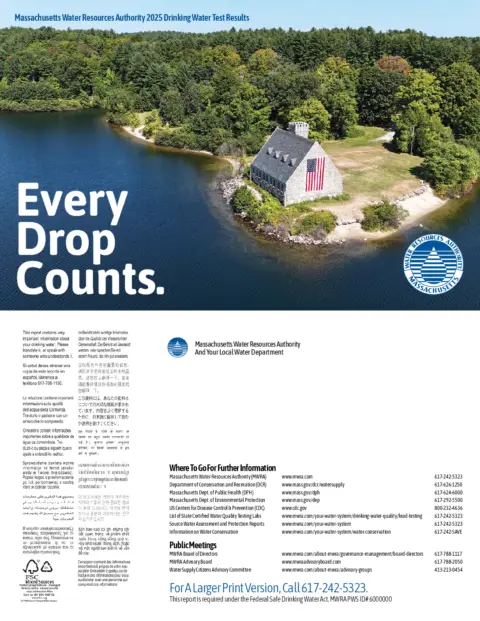 MWRA’s 2025 drinking water test results, Boston edition (PDF, published by the Boston Water and Sewer Commission, June 2026)
PDF 10 pages 2 MB bwsc.org
Download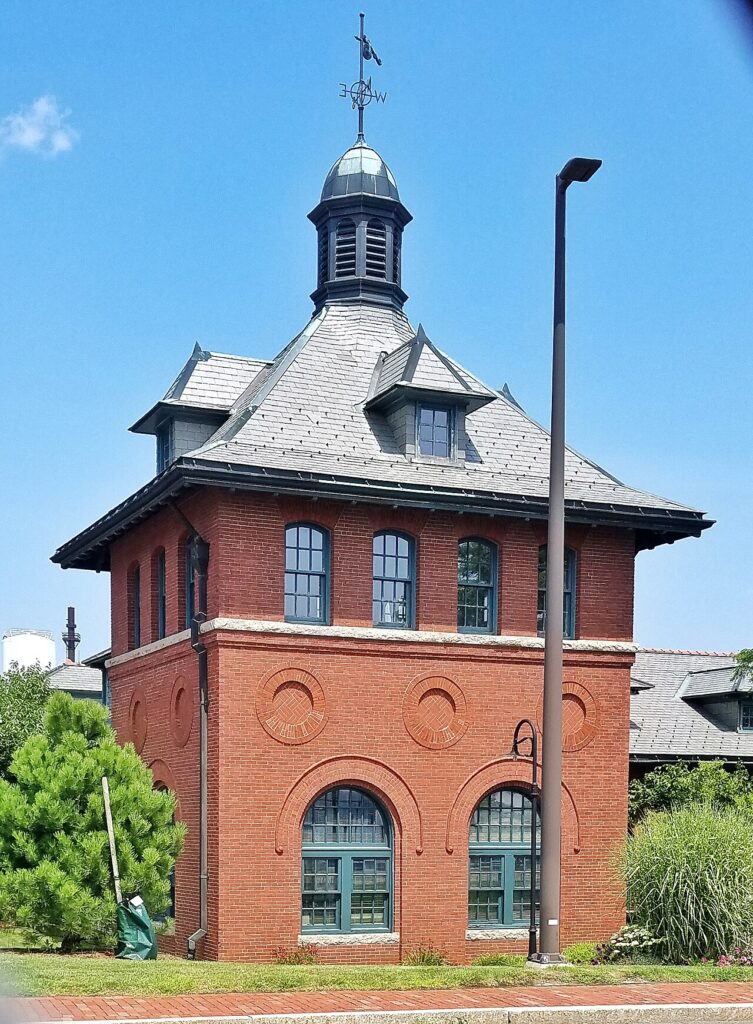
The readings move a little from year to year. MWRA’s report on 2024 data gave an average of 0.7 ppm, with a range of 0.33 to 0.77.
The water leaves the system at Deer Island, in Boston Harbor, where MWRA treats the region’s sewage. Fluoride is not added there; the plant is the other end of the same public system that the fluoride decision belongs to.
Does every MWRA community get fluoridated water?
Water treated at the Carroll plant gets fluoride. MWRA lists some customer towns as only partly supplied by MWRA, so part of their water comes from their own wells or reservoirs, and three western towns are supplied separately through the Chicopee Valley Aqueduct. We did not find a statement from MWRA on fluoride for those three. Your town’s own annual water report, or MWRA’s results page for your community, says what reaches your tap.
Who recommends it, and what they say it does
The 0.7 mg/L level is the recommendation of the U.S. Public Health Service. The Centers for Disease Control and Prevention (CDC) describes it as “the concentration that maximizes fluoride’s oral health benefits while minimizing potential harms, such as dental fluorosis,” a change in how teeth look. The CDC explains that too much fluoride while a child’s teeth are growing can leave “white flecks, spots, or lines” on the enamel, that in the U.S. it is “mostly mild and cosmetic,” and that “older children, teens, and adults cannot get dental fluorosis.”
The CDC states its case plainly: “Drinking fluoridated water keeps teeth strong and reduces cavities by about 25% in children and adults.” It also estimates “an average estimated return on investment (ROI) of $20 for every $1 spent.” The CDC does not order anyone to fluoridate: “State and local governments decide whether to implement water fluoridation.”
“Even in light of recent news reports concerning fluoride, the American Academy of Pediatrics continues to recommend that children drink fluoridated tap water.”
Massachusetts Water Resources Authority, on its fluoride page
Massachusetts’ own health department is just as direct. MWRA quotes it: “The Massachusetts Department of Public Health strongly supports community water fluoridation as a safe, cost effective, and proven practice that promotes good oral health within our communities.” The American Dental Association (ADA) supports it too. The American Academy of Pediatrics (AAP), on its site for parents, answers the question of whether fluoridated water is safe for children with “Yes. America has been preventing tooth decay with fluoridated water for over 80 years.”
Toothpaste is the other source
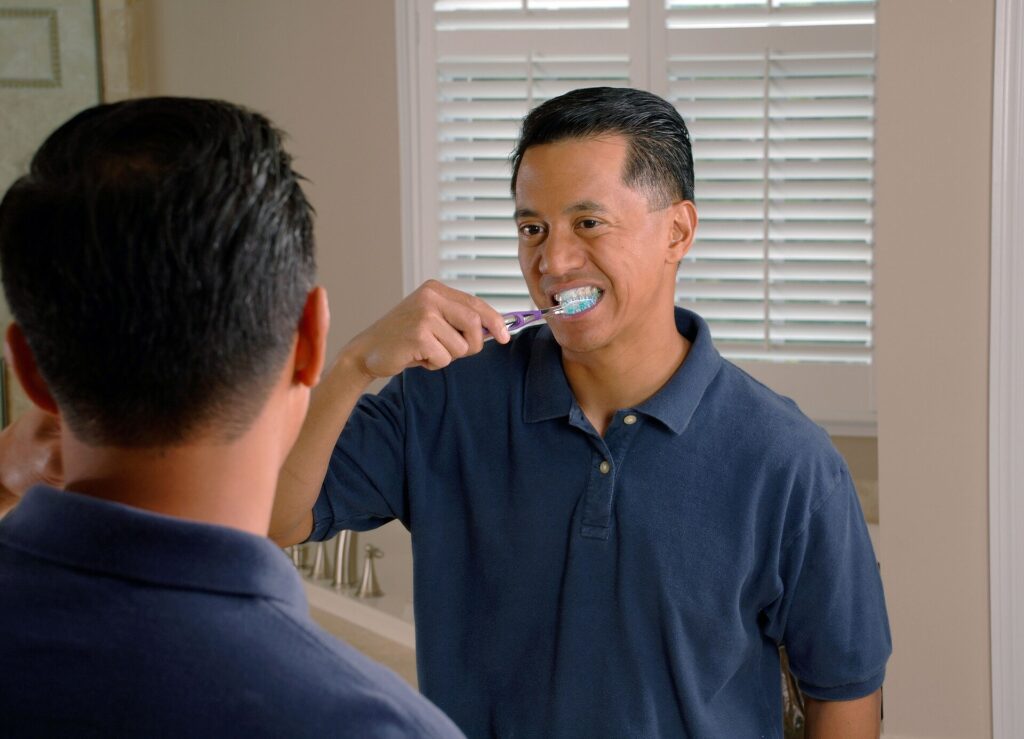
“Fluoridated water and fluoride toothpaste work together to prevent cavities,” says the CDC. For young children, the AAP recommends “a smear or grain-of-rice–sized amount of fluoride toothpaste twice a day when the first tooth appears and until age 3 years,” then “a pea-sized amount” from age 3. It adds that children “do not need to rinse their mouth with water after brushing.” The ADA’s advice for parents gives the same two amounts.
Photo: Bill Branson, National Cancer Institute, 2007, public domain, via Wikimedia Commons.
The CDC made the same point for children in a short podcast, in which one of the characters tells the others: “We need to brush twice a day and use a toothpaste with fluoride.”
Where the water is not fluoridated, the state health department tells clinicians to consider prescribing fluoride supplements “(non-fluoridated communities only),” from 6 months of age until age 16. The AAP likewise recommends dietary supplements only where the drinking water is not fluoridated. Whether a child needs one is a question for the child’s dentist or pediatrician.
What did the FDA do about fluoride drops and tablets?
On October 31, 2025, the U.S. Food and Drug Administration (FDA) said it had sent notices to four companies “outlining the agency’s intention to take enforcement action against those marketing unapproved fluoride-containing ingestible drugs labeled for use in children under age 3 or older children at low or moderate risk for tooth decay.” The agency now “recommends that ingestible fluoride drug products be limited to children aged three years and older who are at high risk for tooth decay.” The FDA’s action covers swallowed fluoride products; it does not cover toothpaste or tap water.
What the latest reviews found
Two reviews published in 2024 are behind much of the recent argument. The first asks about possible harm and the second about benefit, and neither settled the question at Boston’s level.
The National Toxicology Program
In August 2024, the National Toxicology Program (NTP), part of the National Institutes of Health, concluded with moderate confidence that “higher levels of fluoride exposure, such as drinking water containing more than 1.5 milligrams of fluoride per liter, are associated with lower IQ in children.” That is more than twice Boston’s level. It also found “no evidence that fluoride exposure had adverse effects on adult cognition.”
There were insufficient data to determine if the low fluoride level of 0.7 mg/L currently recommended for U.S. community water supplies has a negative effect on children’s IQ.
National Toxicology Program, fluoride monograph, August 2024
Cochrane
In October 2024, Cochrane, which reviews medical evidence, updated its review of water fluoridation. It covered 157 studies and found that “the benefit of fluoridation has declined since the 1970s, when fluoride toothpaste became more widely available.” In studies from after 1975, starting fluoridation was linked to about a quarter of a tooth less decay per child in baby teeth, and the review notes that “this effect estimate includes the possibility of benefit and no benefit.” Cochrane also notes that “around 3% of the population” of Western Europe receives water with added fluoride.
The ADA answered the same week that it would “continue to endorse community water fluoridation at optimal levels to help prevent tooth decay,” and that “the review does not present any new or significant findings on the subject.”
What would happen if fluoridation stopped? One estimate came from researchers in 2025, reported by STAT News: 7.5% more U.S. children would get cavities if fluoridation were banned nationwide, adding up to 25.4 million more decayed teeth. That is a forecast from a model, not a measurement.
Two podcasts on the argument
For a longer listen, the science podcast Science Vs gave a full episode to the question in April 2025, and the podcast Let’s Get Oral did the same in May 2025. We have not listened to either in full; the descriptions say both cover the history of fluoridation and the current dispute.

Who decides, and where the fight is now
Sunset over the Wachusett Reservoir in Clinton, August 3, 2026. Photo: 4300streetcar, CC BY 4.0, via Wikimedia Commons.
The national fight, 2025 to 2026
Utah went first. Its governor signed a bill in March 2025 that prohibits adding fluoride to public water from May 7, 2025, according to the Congressional Research Service. Florida’s governor signed a similar law on May 15, 2025, and it took effect on July 1, 2025. The National Conference of State Legislatures counted at least 21 states that introduced bills in 2025 to prohibit fluoridation or repeal rules requiring it.
No state followed in 2026. CareQuest Institute for Oral Health, an organization that supports fluoridation, reported in September 2026 that “no additional statewide bans or restrictions on fluoride have been enacted in 2026,” and listed Massachusetts among the states where proposed bans stalled.
| Place | Rule, November 2026 | Law | In force since | Fluoridated, 2022 |
|---|---|---|---|---|
| Utah | Statewide ban | H.B. 81 | May 7, 2025 | 43.6% |
| Florida | Statewide ban | SB 700, Chapter 2025-22 | July 1, 2025 | 78.1% |
| Massachusetts | Each city or town decides | Chapter 111, Section 8C | — | 58.2% |
| New Jersey | No ban | — | — | 16.2% |
| Hawaii | No ban | — | — | 8.5% |
| Washington, D.C. | No ban | — | — | 100.0% |
| United States | No federal requirement | CDC recommends 0.7 mg/L; EPA limit 4.0 mg/L | — | 72.3% |
In Washington, the argument moved to the federal agencies. On April 7, 2025, Health and Human Services Secretary Robert F. Kennedy Jr. said the CDC would stop recommending community water fluoridation. As of October 2026, the health policy research group KFF reported that “to date, HHS and CDC still [recommend] community water fluoridation,” and the San Diego Union-Tribune reported in September 2026 that the change “has not yet come to pass.” Kennedy remains HHS Secretary.
The U.S. Environmental Protection Agency (EPA), which sets the 4.0 mg/L limit, announced on April 6, 2025 that it would “expeditiously review” new science on fluoride. It noted that the current standard “was last evaluated by the Agency in July 2024.” In August 2026 the EPA released the protocol it will use to write a draft health assessment, which “once completed will be available for public comment.”1 The EPA’s limit is about safety; the EPA notes that it does not itself recommend whether to add fluoride.
Who decides in Massachusetts
In Massachusetts the decision belongs to each city or town’s board of health, under Chapter 111, Section 8C of the state’s General Laws. The CDC counts 58.2% of the state’s residents on public water systems as receiving fluoridated water in 2022, ranking Massachusetts 36th.2 NBC Boston counted 120 of the state’s 351 cities and towns as fully fluoridated in April 2025, and named Worcester, Springfield and Brockton as the largest without it.
- The board of health may order fluoridation when it “considers doing so in the best interest of the inhabitants.”
- The order is published in a local newspaper and takes effect no sooner than 90 days later.
- Within those 90 days, a petition signed by 10% of registered voters puts the question on the ballot.
- If voters reject it, the board cannot order fluoridation again for at least two years.
The section describes how fluoridation starts, but sets out no procedure for stopping it. It also has a clause for towns that share one water source and cannot treat it separately, which is the position of the communities on the MWRA system. That is why towns that want to stop have gone to the Legislature.
Somerset
Somerset voted at its May 2025 town meeting to seek a law letting it stop. The result is Senate bill 2627, “An Act allowing the town of Somerset to prohibit water fluoridation,” filed “by vote of the town.” The Senate passed it on April 30, 2026. The House read it a second time on May 18, 2026, and it now sits with the House Committee on Bills in the Third Reading.
Shrewsbury
In Shrewsbury, Town Meeting voted 108 to 52 on October 22, 2025 against a citizens’ petition for a townwide vote on fluoride. The question then went to the town’s Board of Health, which has scheduled a “State of the Science” forum for December 17, 2026, and plans “a policy decision regarding Community Water Fluoridation in Shrewsbury during their December 29, 2026 Board of Health Meeting.” One of the questions the board set for the forum reads:
“Is community water fluoridation at 0.7 mg/L a justifiable public health measure for Shrewsbury in 2026, accounting for current evidence on both benefits and risks?”
Shrewsbury Board of Health, notice of November 5, 2026
People in Boston ask about their water too, mostly in general terms. A May 2025 thread on the city’s Reddit forum, started by someone who believed their tap water was making them ill, drew replies about MWRA’s water and the pipes inside buildings. It is a conversation, not evidence about the water.

What to watch for next
- December 29, 2026: Shrewsbury’s Board of Health is due to decide its fluoridation policy.
- The EPA’s draft assessment: once released, it will be open for public comment.
- The Somerset bill: it needs a House vote and the governor’s signature to become law.
- The CDC: whether its recommendation changes, as the health secretary said it would.
Nothing in this debate changes what comes out of a Boston tap today: MWRA’s water carries fluoride at about 0.7 ppm. Questions about fluoride for a particular child or adult are best taken to a dentist. BostonDentist.com lists practices across the city, including pediatric dentists.
Sources
- MWRA, 2025 drinking water test results, Boston edition (PDF)
- MWRA, fluoride
- MWRA, John J. Carroll Water Treatment Plant
- MWRA, about MWRA and customer communities
- MWRA, annual water quality test results, 2025
- Massachusetts DPH, 2021 list of cities and towns by fluoridation status
- Massachusetts DPH, community water fluoridation status
- Massachusetts General Laws, Chapter 111, Section 8C
- Massachusetts Legislature, bill S.2627 (Somerset)
- Town of Shrewsbury, Board of Health forum notice, November 5, 2026
- Community Advocate, Shrewsbury Town Meeting vote, October 22, 2025
- NBC Boston, map of fluoride in Massachusetts water, April 9, 2025
- CDC, about community water fluoridation
- CDC, community water fluoridation recommendations
- CDC, about dental fluorosis, August 7, 2024
- CDC, community water fluoridation FAQ
- CDC, 2022 water fluoridation statistics
- CDC, “Kidtastics: Smile!” transcript (PDF)
- National Toxicology Program, fluoride monograph, August 2024
- Cochrane, water fluoridation for the prevention of dental caries, October 2024, and Cochrane’s news release
- American Dental Association, statement on the Cochrane review, October 4, 2024
- American Dental Association, MouthHealthy: fluoride
- American Academy of Pediatrics, HealthyChildren.org: fluoride and children
- FDA, action on unapproved fluoride drug products, October 31, 2025, and ingestible fluoride drug products
- EPA, review of new science on fluoride, April 6, 2025, and the August 2026 protocol
- Congressional Research Service, R48539, May 16, 2025
- Florida Senate, SB 700 (2025)
- National Conference of State Legislatures, policy actions on fluoride
- CareQuest Institute for Oral Health, fluoride legislation in 2026, September 14, 2026
- KFF, tracking HHS public health policy actions
- San Diego Union-Tribune, September 23, 2026
- The EPA’s news release is dated August 2, 2026; the EPA’s fluoride page and the protocol itself give August 3, 2026. ↩︎
- Other counts measure something different. NBC Boston reported in April 2025 that “more than 60% of people in the state currently get fluoride in their water,” counting everyone rather than only the people on public water systems that the CDC’s figure covers. ↩︎