Boston has a habit of claiming firsts, and some of the best known involve teeth. The silversmith of the midnight ride also fastened false teeth in the North End. A Boston dentist gave the ether at the 1846 demonstration that made surgical anesthesia famous. And two of the country’s early dental schools opened in the city within a year of each other.
Some of these stories are better documented than others. This article follows the record: what the museums, libraries and archives that hold the evidence say happened, and where they now say the familiar version goes further than the evidence. It ends with the places you can still visit.
1768
Paul Revere’s first dental advertisement in the Boston-Gazette
8,000+
operations in the Ether Dome between 1821 and 1867
5
students in the first class of Harvard’s dental school, 1867
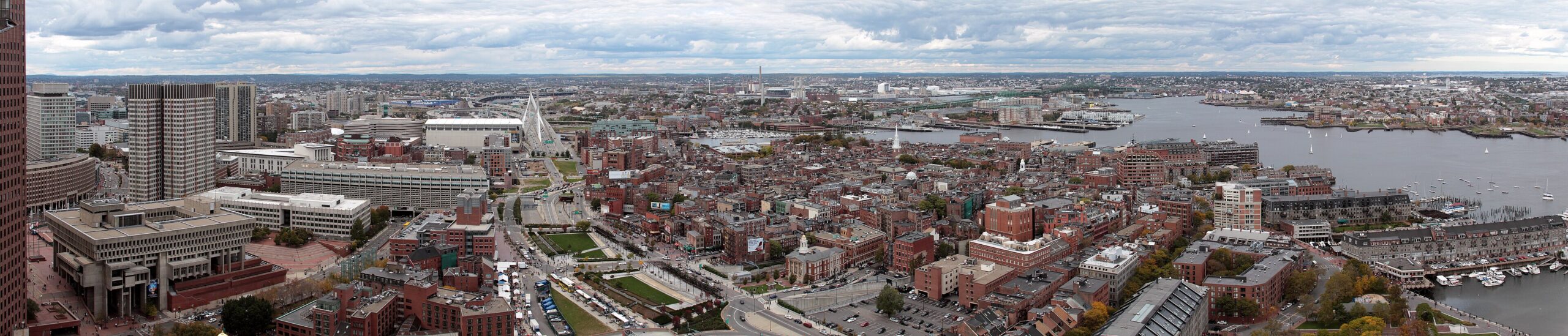
Paul Revere, silversmith and dentist
Paul Revere was born in the North End in 1735.1 He was a gold and silversmith by trade, and for a few years he was a dentist too. According to the Paul Revere House, the museum in his former home, “he also practiced as a dentist from 1768 to 1775, to the extent that his time and skills allowed. He cleaned teeth, fastened in false teeth and sold toothpaste.”
He learned the work from John Baker, who called himself a “surgeon-dentist” and practiced in Boston before moving to New York. In 1768 Revere placed a notice in the Boston-Gazette that he could look after Baker’s work if the teeth Baker had fitted came loose. Two years later he advertised on his own account, and his metalwork was the point: replacement teeth were held in place with thin gold or silver wire, which, the museum notes, “Revere’s skills allowed him to make.” His 1770 advertisement put it this way:
“(in which Time he has fixt some Hundreds of Teeth) that he can fix them as well as any Surgeon Dentist … not only an Ornament but of real Use in Speaking and Eating.”
Paul Revere, advertisement in the Boston-Gazette, 1770, as quoted by the Paul Revere House
That is most of the evidence there is. The museum says Revere’s dentistry is known mainly from those two advertisements and “an entry in his 1774 account book for a cleaning.” The museum also owns an ivory partial denture attributed to him, given in 2016 by the dentist and collector Dr. H. Martin Deranian. It is careful about it: “While we can’t prove that Paul Revere actually made this denture, the style and materials are consistent with 18th century dental practices.”
| What is often said | What the record shows |
|---|---|
| Revere made George Washington’s false teeth. | He did not. The Paul Revere House calls this a “popular myth.” |
| Revere made full sets of dentures. | “There is no evidence he made full sets of dentures,” says the museum. |
| Revere was a dentist for much of his life. | The museum gives 1768 to 1775. The surviving evidence is two advertisements and one account-book entry. |
| Revere identified Joseph Warren’s body by his own dental work. | Warren was recognized by his false teeth. Revere’s part is first recorded in print in 1858; see below. |
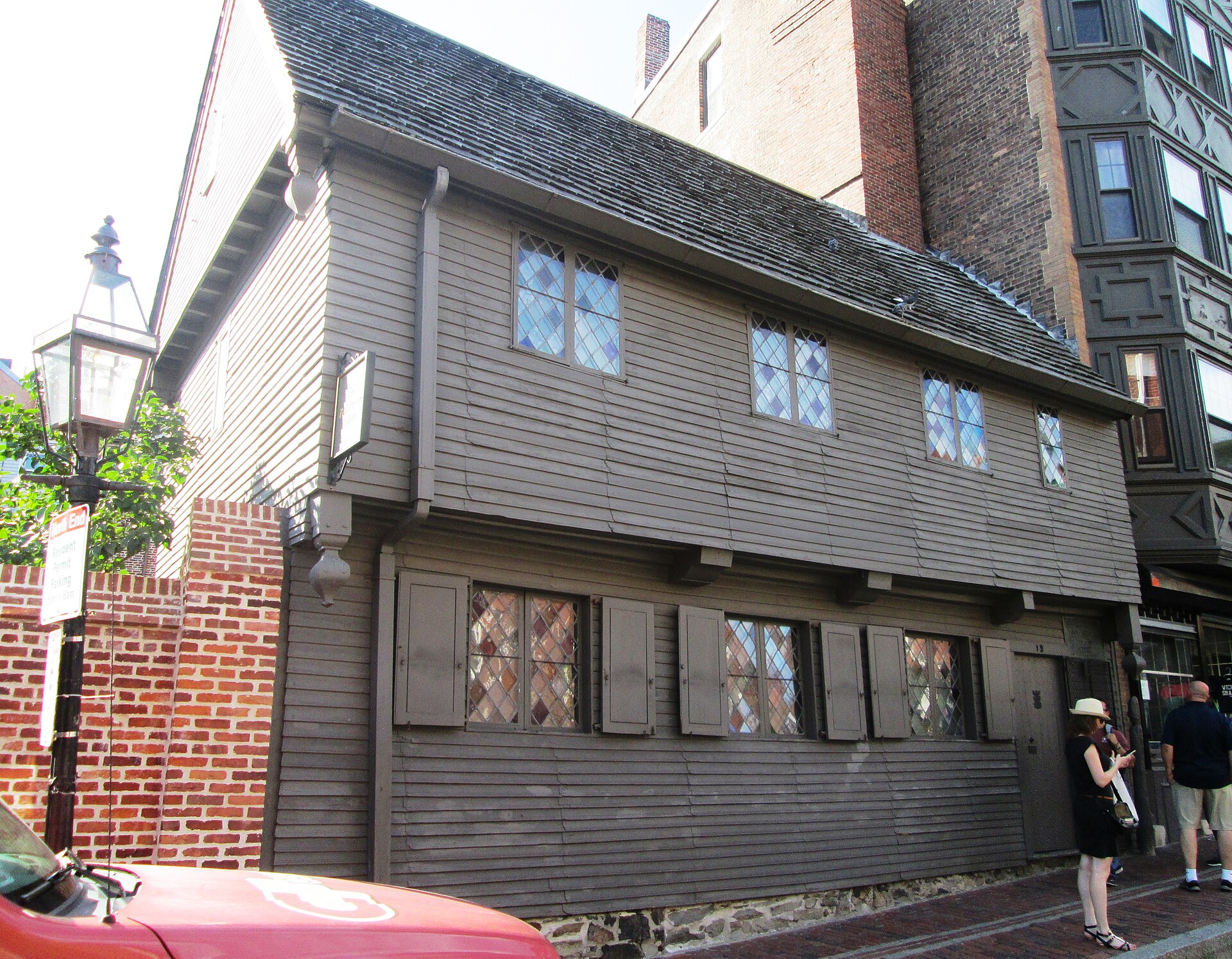
Revere bought the house at 19 North Square in 1770. Built about 1680, it is, in the museum’s words, “downtown Boston’s oldest building,” and it opened to the public in April 1908 as one of the country’s earliest historic house museums.
The North End still has dentists. The practice we list nearest to the house is on Hanover Street, about a minute’s walk away:
Joseph Warren’s false teeth
The most famous dental story in Boston begins at Bunker Hill. Dr. Joseph Warren, born in Roxbury in 1741 and trained in medicine at Harvard, was killed at the battle on June 17, 1775, at 34. The National Park Service says the British “placed Warren’s body in a common mass grave.”
About nine months later, the grave was opened. History.com reports that the searchers found two bodies and at first could not tell which was Warren’s. The New-England Chronicle reported on April 25, 1776 that the body “was sufficiently known by two artificial teeth, which were set for him a short time before his glorious exit.” The newspaper did not say who had set them.
The story that Revere recognized his own work comes later. The first known account to say so is General William H. Sumner’s Reminiscences of Gen. Warren and Bunker Hill, published in 1858, which credits “Col. Revere, who set the artificial tooth … and who recollected the wire he used in fastening it in.” The National Park Service tells that version. The Paul Revere House no longer does: an erratum to its own podcast says there is evidence Warren was identified by his dental work, “but that there is insufficient evidence to definitively state that Revere played a role in the identification.”
We do not have definitive record of Revere having done dental work for Warren.
Tegan Kehoe, Research and Adult Program Director at the Paul Revere House, to History.com, April 2026
Was it America’s first forensic dental identification?
It is often called that. A 2016 article in the journal Military Medicine describes it more narrowly, as “the first forensic dental identification of a military service member ever performed in this country,” and gives Revere the credit. Even that claim rests on the 1858 account. What the 1776 newspaper does show is that the body was recognized by two artificial teeth, which makes it an early case of identifying someone by their dental work, whoever did it.
Warren was later buried in a family plot at Forest Hills Cemetery. Revere named a son born in 1777 Joseph Warren Revere.
Henry Wadsworth Longfellow’s poem about the ride was recited for a Victor record in 1916, which the Library of Congress has made available:
Horace Wells and the “humbug” of 1845
Seventy years later, dentists were at the center of a bigger Boston story: the search for a way to operate without pain. Horace Wells, a dentist, came to Boston in January 1845 to show that teeth could be pulled painlessly under nitrous oxide. Harvard’s Countway Library records that he tried “before students and physicians at Harvard Medical School” and failed. Wells himself wrote that “several expressed their opinion that it was a humbug affair.”
Many accounts place that failure in the operating room at Massachusetts General Hospital (MGH). A 2013 paper by Rajesh Haridas found “no primary evidence” for that, and concluded the demonstration “probably occurred around the end of January 1845, in a public hall on Washington Street, Boston.” Wells died in a New York prison on January 23, 1848.
Ether Day, October 16, 1846
William T. G. Morton had briefly been Wells’s dental partner in Boston in 1843. He then opened his own practice at 19 Tremont Street, and attended Harvard Medical School without completing a degree. On September 30, 1846, at the suggestion of Charles T. Jackson, Morton gave sulphuric ether to a patient named Eben Frost and pulled his tooth. The next day the Boston Daily Journal reported the extraction had been done “without giving him the slightest pain.”
William T. G. Morton, engraving. Wellcome Collection, CC BY 4.0, via Wikimedia Commons.
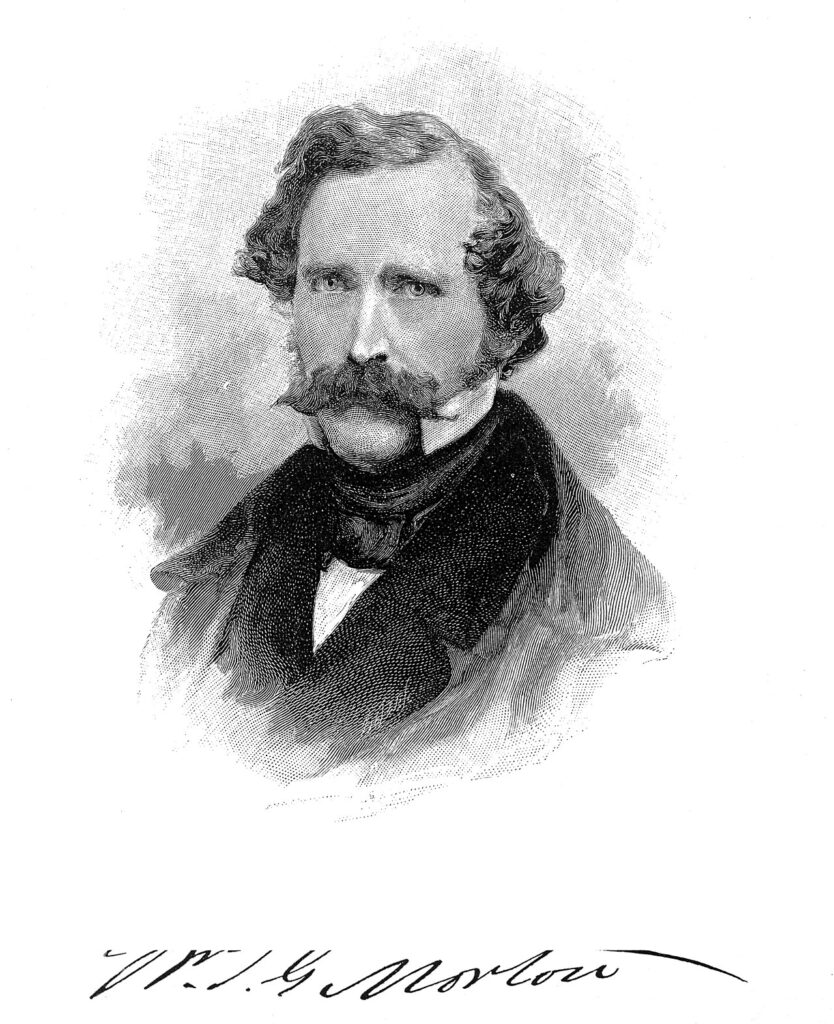
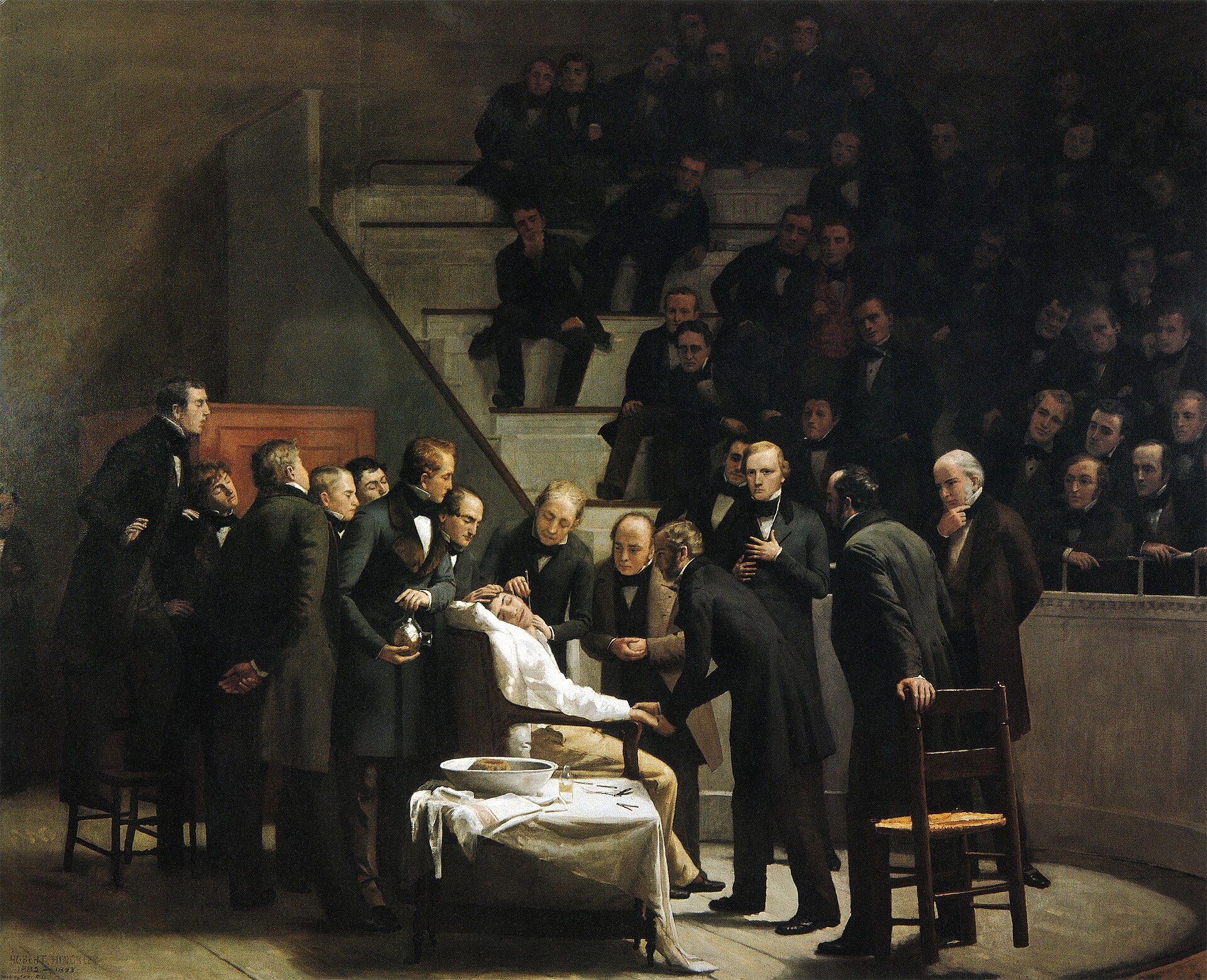
Two weeks later Morton took ether to the hospital. MGH’s own library describes what happened: “On October 16, 1846, MGH co-founder Dr. John Collins Warren removed a small tumor from the neck of Gilbert Abbott after an anesthetic agent provided by Boston dentist William T. G. Morton had been used.” Morton gave the ether from a glass globe made for him by Nathan B. Chamberlain.
Not quite painless, and not quite first
“The First Operation Under Ether”, painted by Robert C. Hinckley between 1882 and 1893. Public domain, via Wikimedia Commons.
The day was not the clean triumph of the paintings. A 2022 study of the hospital’s surgical records found that the patient’s name was Edward Gilbert Abbott, that he was 21, and that the operation, “an unsuccessful ligation of a congenital lymphovascular malformation, was performed under incomplete general anesthesia.” Abbott “moved and cried out during the latter part of the procedure,” although he later said he had not felt pain. Warren himself filed the case among those of “imperfect etherization.” The Countway Library gives the first complete etherization to the next day, October 17, when the surgeon George Hayward removed a fatty tumor from a woman’s shoulder.
Nor did Warren necessarily say the line he is remembered for. “Gentlemen! this is no humbug” appears in no eyewitness report of the day; Haridas traced its earliest appearance to a biography of Morton first published in 1859. And Boston was not first to use ether in surgery: Dr. Crawford Long of Georgia used it in 1842, but, as NPR put it, “didn’t publish his findings until 1849.” Boston’s claim is to the first public demonstration.
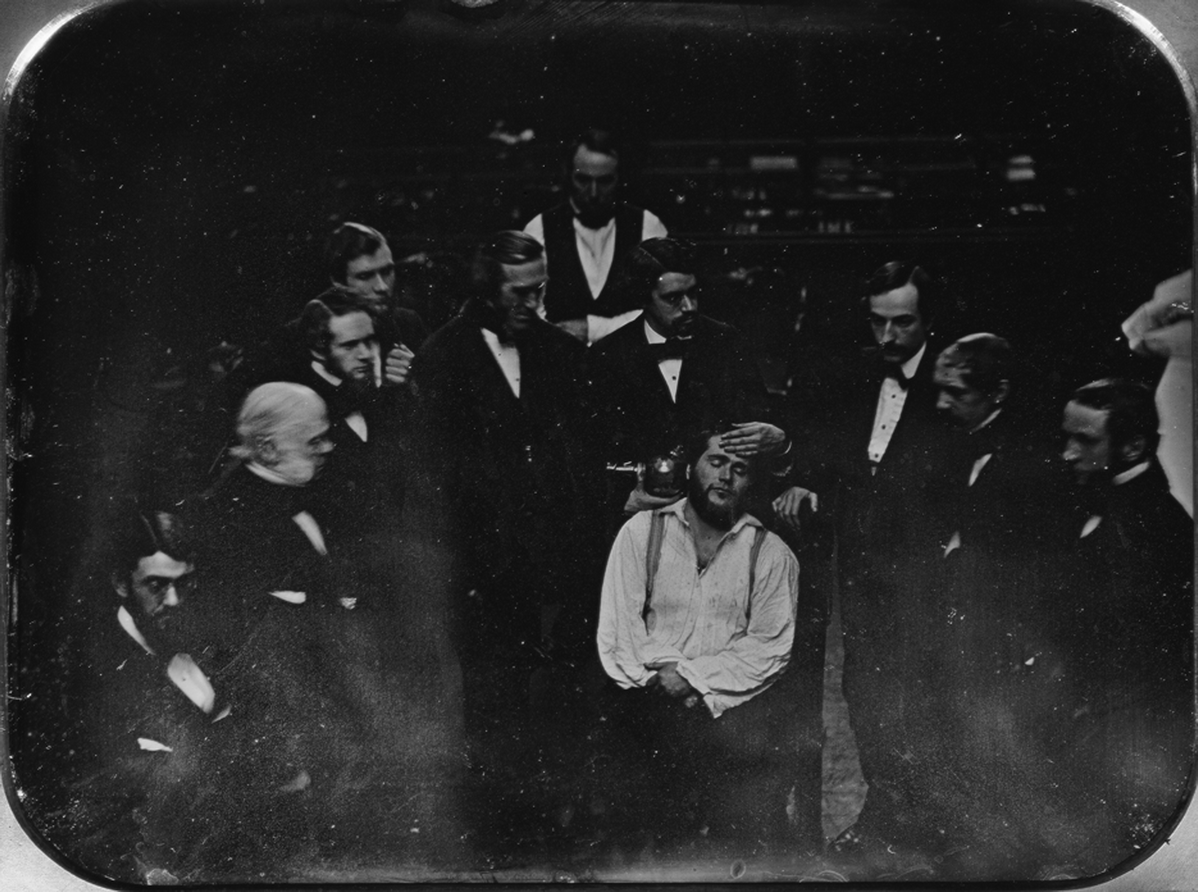
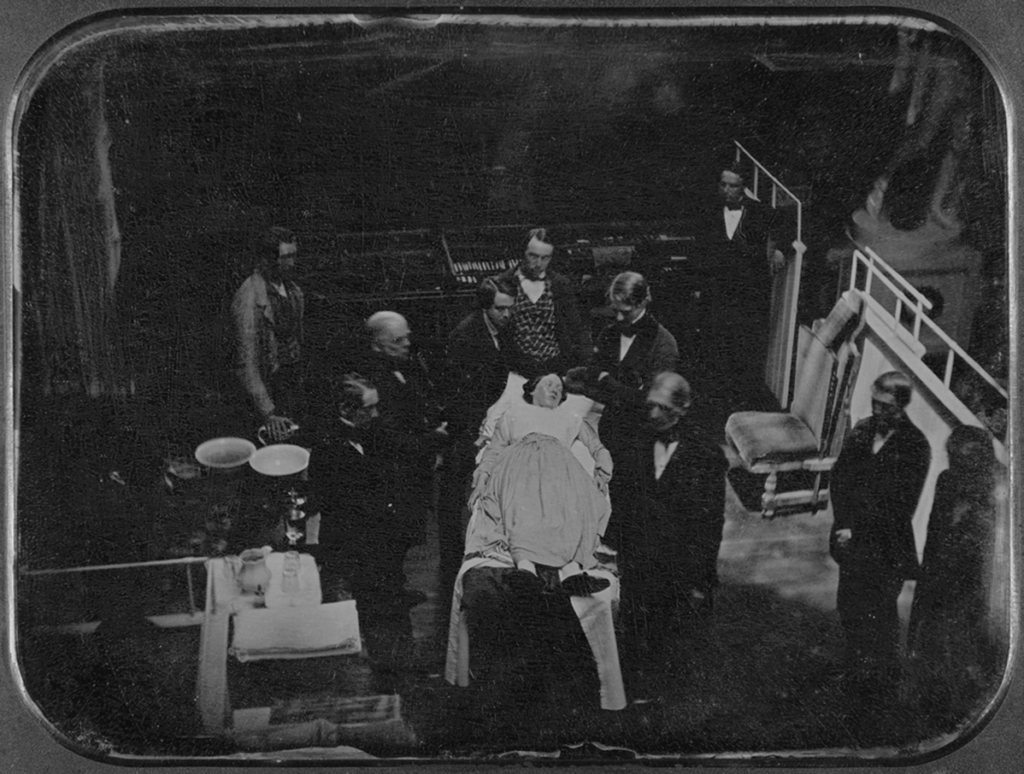
No photograph of October 16 is known. The Boston photographers Southworth & Hawes did make daguerreotypes in the same room at later operations. Their dates and subjects are disputed: Haridas found, as Fstoppers reported in October 2026, that 23 of 37 publications that reproduced them described or dated them wrongly.
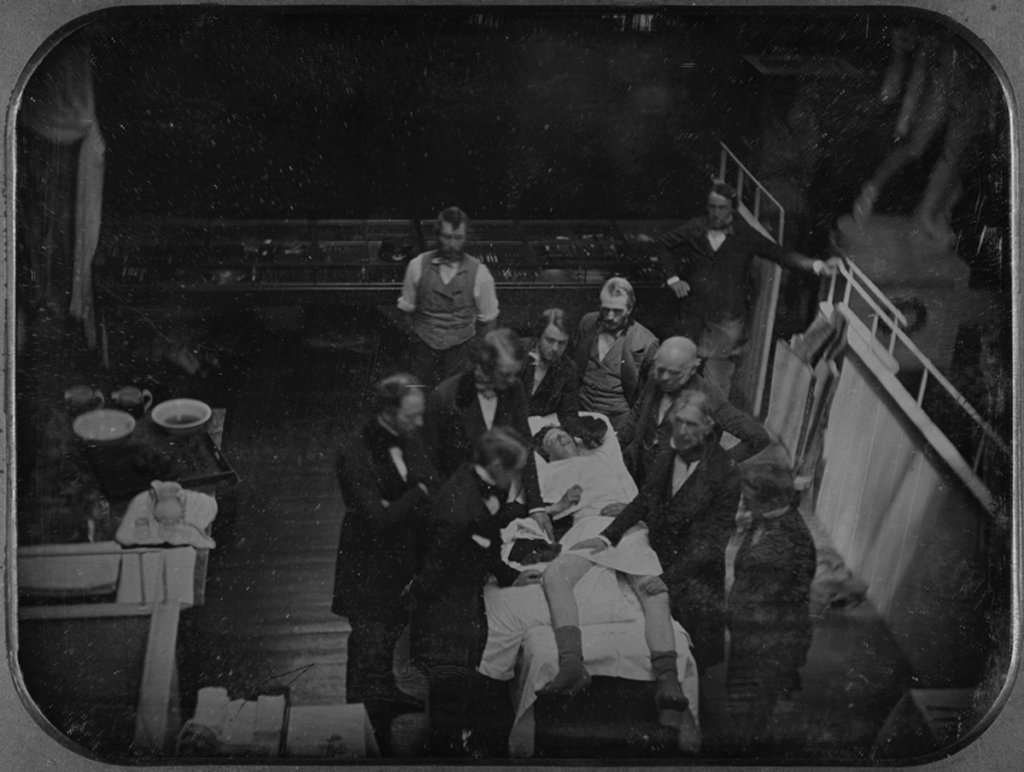
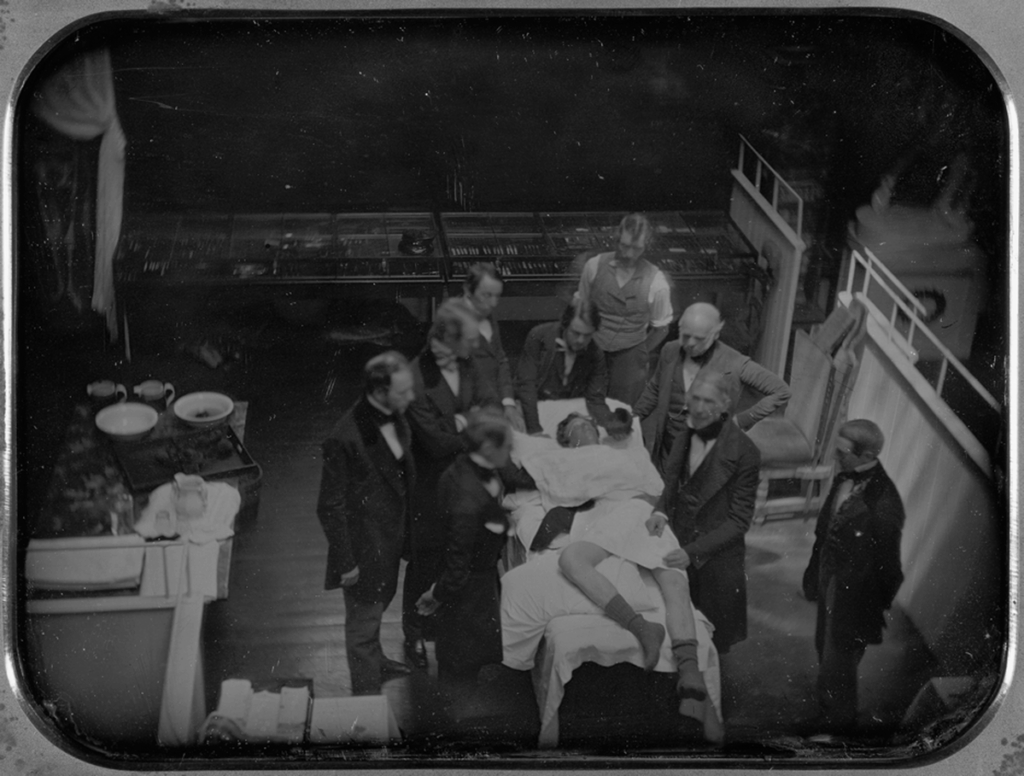
Morton and Jackson were granted a patent, No. 4818, on November 12, 1846. Six days later the surgeon Henry Jacob Bigelow published the first article on the discovery, in the Boston Medical and Surgical Journal. Morton followed in 1847 with a pamphlet on how to give ether, which the National Library of Medicine has digitized.
 Henry Jacob Bigelow, “Insensibility during surgical operations produced by inhalation”, 1846 (PDF, Yale’s copy on the Internet Archive, public domain)
PDF 20 pages 2 MB archive.org
DownloadThen came the quarrel over credit. In 1848 the hospital’s trustees concluded that “to Dr. Morton the world is indebted for this discovery,” while granting that Jackson’s advice mattered. Jackson claimed the discovery as his own. Morton never managed to enforce his patent or profit from it, and died on July 15, 1868. Oliver Wendell Holmes summed up the quarrel that year:
“One pedestal! Two statues! Morton here! Jackson there! Underneath the simple inscription, ‘To Ether!’”
Oliver Wendell Holmes, 1868, as recorded by Harvard’s Countway Library
| When | Who | What happened |
|---|---|---|
| January 1845 | Horace Wells | A painless extraction under nitrous oxide fails before Harvard students: “a humbug affair.” |
| September 30, 1846 | William T. G. Morton, Eben Frost | Morton pulls Frost’s tooth under ether at his Tremont Street office. |
| October 16, 1846 | Morton, John Collins Warren, Edward Gilbert Abbott | The public demonstration at MGH, under incomplete anesthesia. |
| October 17, 1846 | George Hayward | The first complete etherization, according to the Countway Library. |
| November 12, 1846 | Morton and Charles T. Jackson | Patent No. 4818 granted. |
| November 18, 1846 | Henry Jacob Bigelow | First article published, in the Boston Medical and Surgical Journal. |
| 1868 | J. Q. A. Ward | The Ether Monument goes up in the Public Garden. |
The Ether Dome today
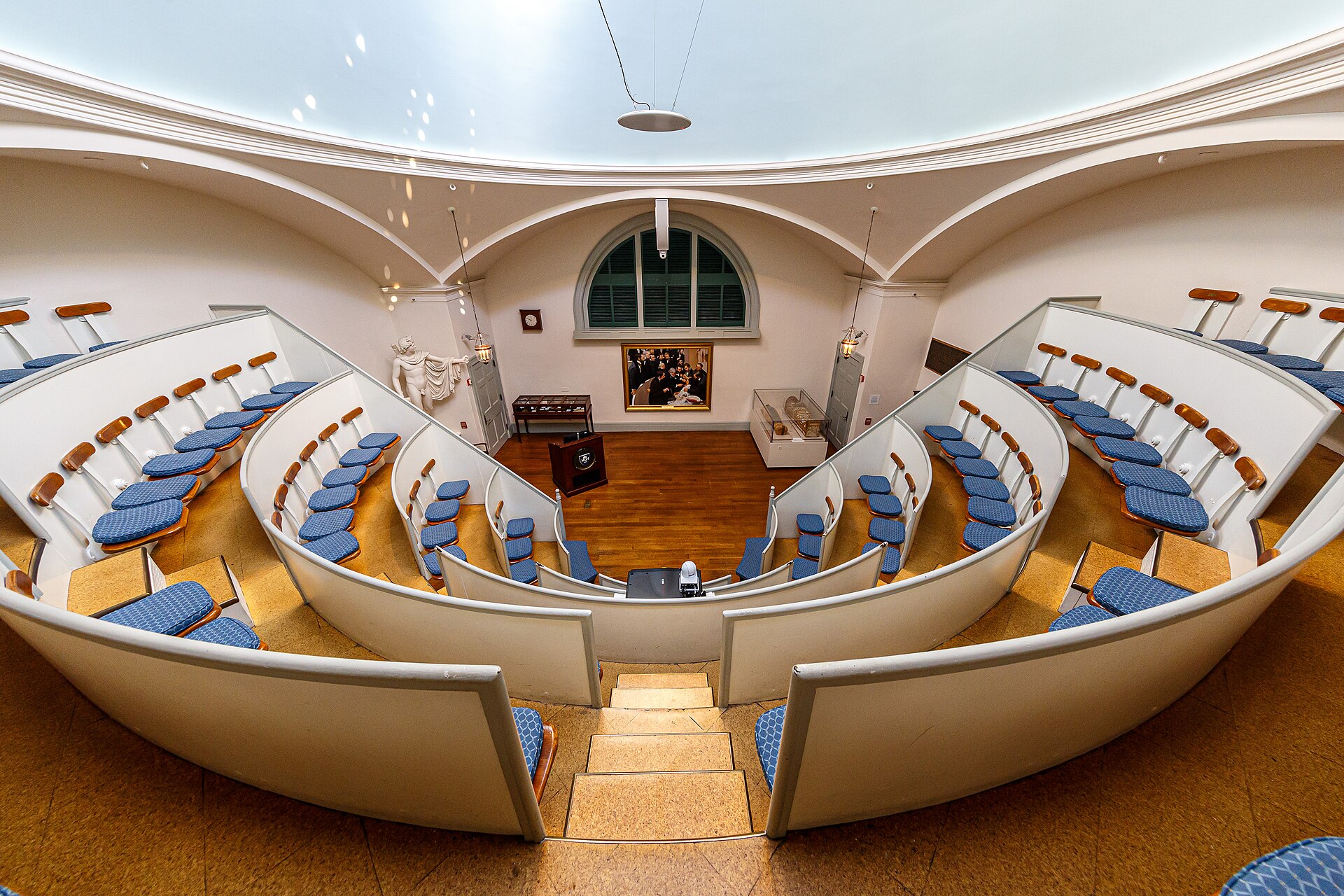
The room where it happened is still there, on the fourth floor of MGH’s Bulfinch Building. The hospital’s Russell Museum explains that it was the hospital’s first operating room, and that “more than 8,000 operations were performed here between 1821 and 1867.” It then served as a nurses’ dormitory, a dining hall and a storeroom, and it is now a meeting room. It was named a National Historic Landmark in 1965.
The scale of what followed is easy to measure at the same hospital. Smithsonian magazine reported in 2026 that in the year after the demonstration “surgeons at Mass General performed 17 operations with anesthesia; today they perform more than 50,000 such operations annually.”
In 2019 a visitor made a short film about the room and shared it on the city’s Reddit forum:
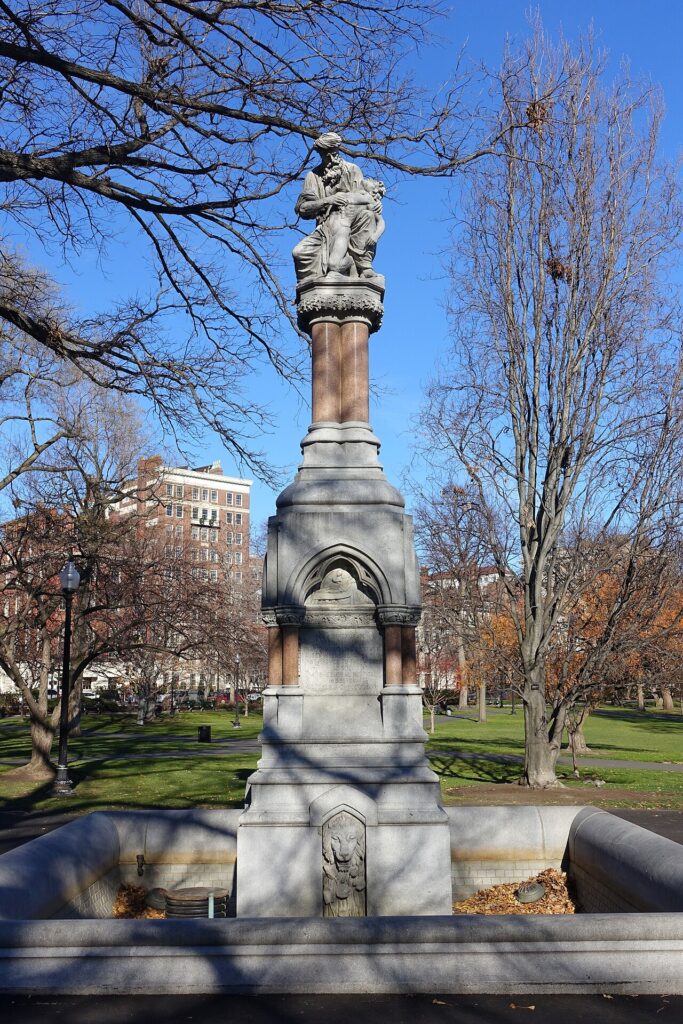
The Public Garden got its monument in 1868. The Friends of the Public Garden describe it as “the oldest monument in the Boston Public Garden,” a forty-foot column topped by John Quincy Adams Ward’s figure of the Good Samaritan.
Inside the Ether Dome, though, all four rivals have a seat. Plaques on the seat backs name Morton, Wells, Jackson and Crawford Long, each as an “Honorary Guest,” and a bronze plaque in the room calls Morton “a Boston dentist.”
Two dental schools in two years
Twenty years after Ether Day, Boston began training dentists in earnest. Harvard’s dental school was founded on July 17, 1867, under Dr. Nathan Cooley Keep, with a first class of five students. The school, now the Harvard School of Dental Medicine, describes itself as “the first dental school in the United States to be affiliated with a university and its medical school,” and as the first to award the Doctor of Dental Medicine (DMD) degree. It took its present name in 1940. Its dean is William V. Giannobile.
Less than a year later, on June 3, 1868, Isaac Wetherbee founded the Boston Dental College. It joined Tufts in 1899 and became Tufts University School of Dental Medicine, whose dean is Nadeem Karimbux. A 1993 history by Dr. H. Martin Deranian says the two schools appeared “essentially simultaneously” as Boston’s first.
- DMD
- Doctor of Dental Medicine, the degree Harvard’s dental school says it was the first to award.
- Surgeon-dentist
- The title John Baker, Revere’s teacher, gave himself.
- Ether Dome
- The name now used for MGH’s first operating room, which the Russell Museum says was “originally called the ‘surgical amphitheater.'”
- Etherization
- Giving a patient ether, in the word Warren used.
One more institution grew from Boston’s dental history. The Forsyth Dental Infirmary for Children, founded by the Forsyth brothers after James Forsyth left $500,000 at his death in 1909, was incorporated on March 25, 1910 and opened in 1914. Its school of dental hygiene, it says, is “the longest continuously operating dental hygiene school in the nation.” In 1920 Joseph P. Kennedy gave the infirmary $3,700 to mark his two-year-old son John F. Kennedy’s recovery from scarlet fever.2 In 2023 it combined with the American Dental Association’s research institute to form the ADA Forsyth Institute.
Where to see it
- The Paul Revere House, 19 North Square in the North End. The museum’s dentistry pages and podcast are on its website.
- The Ether Dome, fourth floor of the Bulfinch Building at MGH. The Russell Museum says it “is open weekdays from 9:00 am to 5:00 pm, but is closed during faculty meetings.”
- The Ether Monument, in the Public Garden.
- Joseph Warren’s grave, at Forest Hills Cemetery.
Boston dentistry has moved on a long way from wire and ivory. For how the city protects its teeth today, read our article on the fluoride in its water:

Oral health
What is in Boston’s tap water, and why fluoride is in it
MWRA adds fluoride to Boston's water at 0.7 mg/L. Who recommends it, what the latest reviews found, and the fight over it in Massachusetts.
Sources
- Paul Revere House, biography of Paul Revere
- Paul Revere House, “Paul Revere and Dentistry” (podcast transcript and erratum), June 20, 2020
- Paul Revere House, “Sinking Your Teeth into History”, August 5, 2020
- Paul Revere House, “Paul Revere and Dr. Joseph Warren”, September 26, 2020
- Paul Revere House, the house and staff list
- History.com, on Revere, Warren and forensic dentistry, April 21, 2026
- National Park Service, Dr. Joseph Warren, and portrait of General Joseph Warren
- Military Medicine, “Paul Revere and Forensic Dentistry”, 2016
- Countway Library of Medicine, Harvard, ether exhibit: Wells, Morton and Jackson, the Frost and Abbott operations, the patent and the monument
- Haridas, on Horace Wells’s 1845 demonstration, 2013, and on “Gentlemen! This is no humbug”, 2016
- Study of the surgical records of Edward Gilbert Abbott, 2022
- Massachusetts General Hospital, history of ether
- Russell Museum, the Ether Dome and visiting
- Smithsonian magazine, on the Ether Dome, June 11, 2026
- NPR, Ether Day, October 16, 2024
- Fstoppers, on the Ether Dome daguerreotypes, October 16, 2026
- Friends of the Public Garden, the Ether Monument
- Harvard School of Dental Medicine, history, founding day and leadership
- Tufts Now, 150 years of the dental school, May 31, 2018, Concise Encyclopedia of Tufts History and school leadership
- Deranian, on Boston’s first dental schools, 1993
- ADA Forsyth Institute, history